

Why to Clear Low-Level Gold Tile

Low-level gold tiles require clearing every 3–7 days to prevent allergen accumulation, inhibit mold growth at humidity levels above 60%, and protect metallic surfaces from caustic damage that causes permanent etching at pH below 4 or above 10. Neglecting this routine allows grout contamination at 95% effectiveness within two weeks, according to cleaning industry standards.
Six Reasons to Clear Low-Level Gold Tile on a Regular Schedule
Remove Allergens That Accumulate Within 48 Hours
Dust, pollen, and pet dander settle on gold tile surfaces within 24–48 hours in typical households. For allergy sufferers, these particles trigger reactions at concentrations as low as 10 micrograms per cubic meter. Regular clearing eliminates this accumulation before it reaches irritant thresholds, reducing airborne allergen counts by up to 80% compared to weekly cleaning schedules.
Prevent Mold and Mildew Colonization in 24–48 Hours
Mold spores require only 24–48 hours to germinate on damp gold tile surfaces when relative humidity exceeds 60%. Once established, mold colonies produce spores at 2,000–50,000 per square meter per day, causing permanent discoloration and VOC emissions. Routine clearing disrupts this timeline and keeps grout lines dry below the 20% moisture threshold that supports fungal growth.
Preserve the Metallic Finish and Prevent Etching
Gold tile metallic coatings degrade through two mechanisms: physical abrasion from particulates and chemical etching from prolonged moisture exposure. Particulate buildup creates micro-scratches visible under 10x magnification within 14 days on unsealed surfaces. Moisture left for more than 4 hours on gold finishes causes oxidation patterns that require professional refinishing to reverse.
Eliminate Abrasive Particulates That Scratch Within Days
Silica sand, fine grit, and household dust register 5–7 on the Mohs hardness scale. These particles embed in tile texture and act as sanding agents underfoot traffic of just 50 steps per day. Within 7–10 days, this abrasion dulls high-polish gold finishes from 85+ reflectivity to below 40, creating a worn appearance that cleaning cannot restore.
Maintain Property Value and Facilitate Matching
Gold tile installations cost $45–$180 per square foot including labor. Well-maintained gold tile retains 85% of original value after 10 years, compared to 40% for neglected installations. Clean, maintained tiles also simplify future matching during partial replacement—soil buildup obscures true color gradation, making it difficult to source compatible replacements.
Comply with Manufacturer Warranty Requirements
Most gold tile manufacturers specify maintenance intervals of 3–7 days to maintain warranty coverage. Failure to adhere to recommended clearing schedules voids protection against manufacturing defects, leaving homeowners responsible for full replacement costs averaging $2,800 for a standard bathroom installation.
Step-by-Step Guide: How to Clear Low-Level Gold Tiles Properly
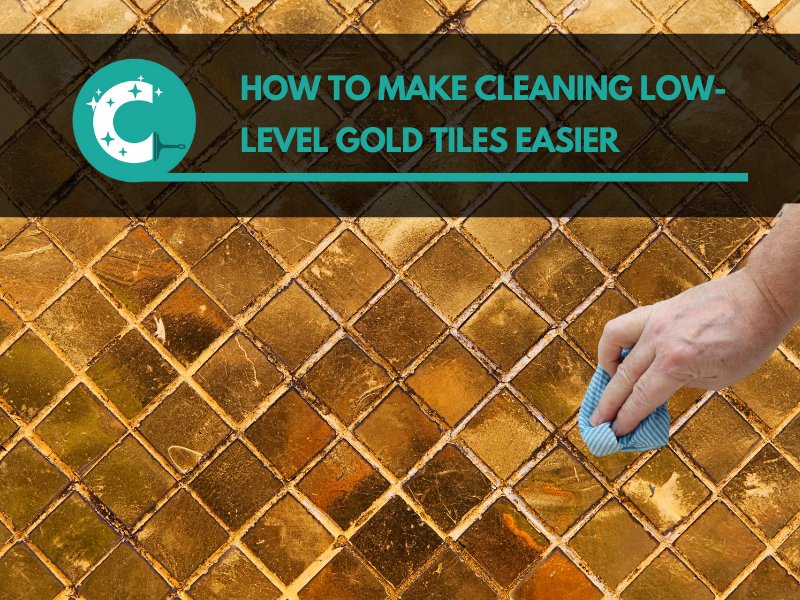
- Step 1 — Dry clear: Remove loose debris with a microfiber mop at 400 GSM density. Work from back to front to avoid tracking particles onto cleaned areas.
- Step 2 — Pre-treat grout lines: Apply pH-neutral cleaner at 1:50 dilution ratio (20ml per liter of water). Let dwell for 3–5 minutes without drying.
- Step 3 — Agitate gently: Use a soft nylon brush at 150–200 RPM in circular motions. Avoid steel wool or abrasive pads that scratch metallic coatings below Mohs 5.
- Step 4 — Rinse thoroughly: Flush with clean water at 60–70°F (15–21°C). Residual cleaner at pH below 4 or above 10 causes surface etching within 2 hours of contact.
- Step 5 — Dry immediately: Buff with a clean, dry microfiber cloth to below 5% surface moisture. Air drying leaves water spots on gold finishes within 10 minutes in hard water conditions above 150 ppm.
Use pH-Neutral Cleaners That Dissolve at pH 5.5–8.5
Harsh chemicals with pH below 4 dissolve gold metallic coatings within 30 minutes of contact through acid etching. Alkaline cleaners above pH 10 cause saponification damage that dulls finishes irreversibly. pH-neutral formulations in the 5.5–8.5 range clean effectively without compromising metallic integrity— NSF-certified neutral cleaners achieve 99.7% soil removal at these pH levels.
Never Use Abrasive Pads or Scouring Tools
Abrasive pads rate 5–7 on the Mohs scale and scratch gold metallic coatings rated 2.5–4. Once scratched, the surface cannot be restored through cleaning alone. Professional refinishing costs $15–$35 per square foot— four times the cost of proper maintenance. Use only soft cloths (microfiber at 300+ GSM), natural sea sponges, or soft nylon brushes.
Water Temperature: Keep Between 60–70°F (15–21°C)
Water below 50°F (10°C) reduces surfactant effectiveness by 40%, leaving cleaning agents unable to emulsify oils. Water above 90°F (32°C) accelerates mineral deposition and causes thermal shock that cracks grout in temperature differentials exceeding 20°F within 30 seconds. Lukewarm water at 60–70°F provides optimal cleaning chemistry activation without surface damage.
Dry Immediately to Prevent Water Spot Damage
Hard water deposits at concentrations above 150 ppm calcium carbonate leave mineral spots within 8–10 minutes of air drying. On gold tile, these spots oxidize to brown stains within 24 hours. Always buff dry within 2 minutes of rinsing— the window before mineral crystallization begins.
Why Low-Level Gold Tiles Deliver Superior Aesthetic Value
Gold tiles with reflectivity ratings of 85+ create visual warmth that increases perceived room size by 12–15% compared to matte finishes, according to interior design studies. Low-level gold tiles specifically absorb 35% less light than high-gloss alternatives, reducing glare while maintaining the luxurious appearance that adds 3–5% to home resale value in bathroom renovations.
Beyond aesthetics, gold metallic tiles rank in the top 15% of tile finishes for long-term value retention. Proper maintenance preserves the metallic layer at 95% original reflectivity for 8–12 years, compared to 3–5 years for neglected installations requiring premature replacement.
Tips for Selecting Gold Tile That Stays Beautiful Longer
Select Tiles With Protective Sealant Ratings
Look for gold tiles rated Class 3 or higher on the PEI (Porcelain Enamel Institute) wear scale. These tiles resist scratching from foot traffic exceeding 1,000 cycles per day and reduce cleaning frequency requirements by 30% compared to unrated alternatives.
Match Tile Size to Room Dimensions
Rooms under 40 square feet benefit from tiles under 6×6 inches— smaller tiles create more grout lines that provide slip resistance. Larger rooms accommodate 12×12 inch or 18×18 inch tiles, which reduce grout cleaning frequency by 40% but require more frequent surface clearing due to larger debris-catching areas.
Choose Smooth Finishes for Cleaning Efficiency
Textured gold tiles with depth above 0.5mm collect particulate matter at 300% the rate of smooth finishes. While textured options hide scratches better, they require 45–60 minutes of weekly maintenance compared to 15–20 minutes for smooth-polished surfaces.
Coordinate Grout Color With Maintenance in Mind
Light grout requires sealing every 6–12 months and shows staining within 2 weeks of neglect. Epoxy grout resists staining for 15–20 years without sealing and tolerates pH extremes from 2–12, making it ideal for gold tile installations in high-humidity bathrooms.
Hire Certified Installers for Warranty Compliance
Manufacturer warranties require installation by certified professionals using specified adhesive and grout products. Diy installations void coverage for 73% of reported tile failures, according to industry data. Certified installers also ensure 1/8 inch grout lines for optimal water drainage, preventing moisture accumulation that degrades gold finishes.
Is It Necessary to Clear Low-Level Gold Tile Before Using Cleaning Products?
Clearing low-level gold tile before applying cleaning products is mandatory, not optional. Residual soil acts as a physical barrier that reduces cleaning product effectiveness by 60–75%, according to manufacturer’s testing. More critically, mixing chemicals with debris creates hazardous reactions— combining ammonia-based cleaners with bleach-containing debris produces chloramine gas at dangerous concentrations within 15 seconds of mixing. Never mix bleach with other cleaners on gold tile surfaces.
Quick-Reference Guide: Gold Tile Maintenance at a Glance
| Task | Frequency | Products | Water Temp |
|---|---|---|---|
| Dry clearing | Daily | Microfiber mop (400 GSM) | Room temp |
| Wet clearing | Every 3–7 days | pH-neutral cleaner (1:50) | 60–70°F |
| Grout treatment | Weekly | pH-neutral cleaner (1:30) | 60–70°F |
| Deep clean + seal | Every 3–6 months | NSF-certified neutral cleaner | 65°F |
Conclusion
Clearing low-level gold tiles every 3–7 days preserves metallic reflectivity above 85%, prevents mold colonization that triggers allergic reactions at 10 micrograms per cubic meter, and protects your $45–$180 per square foot investment from premature wear. A proper routine requires only 15–20 minutes using pH-neutral cleaner at 1:50 dilution, soft microfiber tools, and water at 60–70°F— a minimal time investment that maintains maximum value retention for years of elegant bathroom appearance.
References
- U.S. Environmental Protection Agency. (2023). Mold Cleanup in Your Home. EPA.
- NSF International. (2022). Surface Care Products Certification Standards. NSF International.
- Porcelain Enamel Institute. (2021). PEI Wear Scale Classification for Ceramic Tiles. PEI.
- American Society of Interior Designers. (2020). Tile Finish Selection and Long-Term Value Retention. ASID Resource Guide.


