
How to Get a Sock Out of a Vacuum Hose – Methods & Tips

When a sock lodges inside a vacuum hose, it blocks airflow and reduces suction by up to 70% within seconds. You can remove it using three proven methods: pushing it through with a broom handle, pulling it out with a hooked hanger, or accessing it through the bottom cover. This guide covers all three techniques with step-by-step instructions.
Vacuum cleaner hoses typically measure 1.25 to 2.5 inches (32–64 mm) in diameter. Residential upright vacuums generate 100–200 air watts of suction, while canister models produce 200–400 air watts. When a hose becomes blocked, suction drops immediately—and prolonged clogging can strain the motor and damage the belt.
How to Get a Sock Out of a Vacuum Hose – Step by Step Guide
Tools You’ll Need
- Broom handle (1–1.25 inch diameter works for most standard hoses)
- Wire coat hanger or metal hanger
- Pliers (to bend the hanger)
- Screwdriver (Phillips or flathead depending on your model)
Standard residential vacuum hoses have an inner diameter of 1.25 inches (32 mm). Most broom handles fit this size perfectly for pushing blockages through.
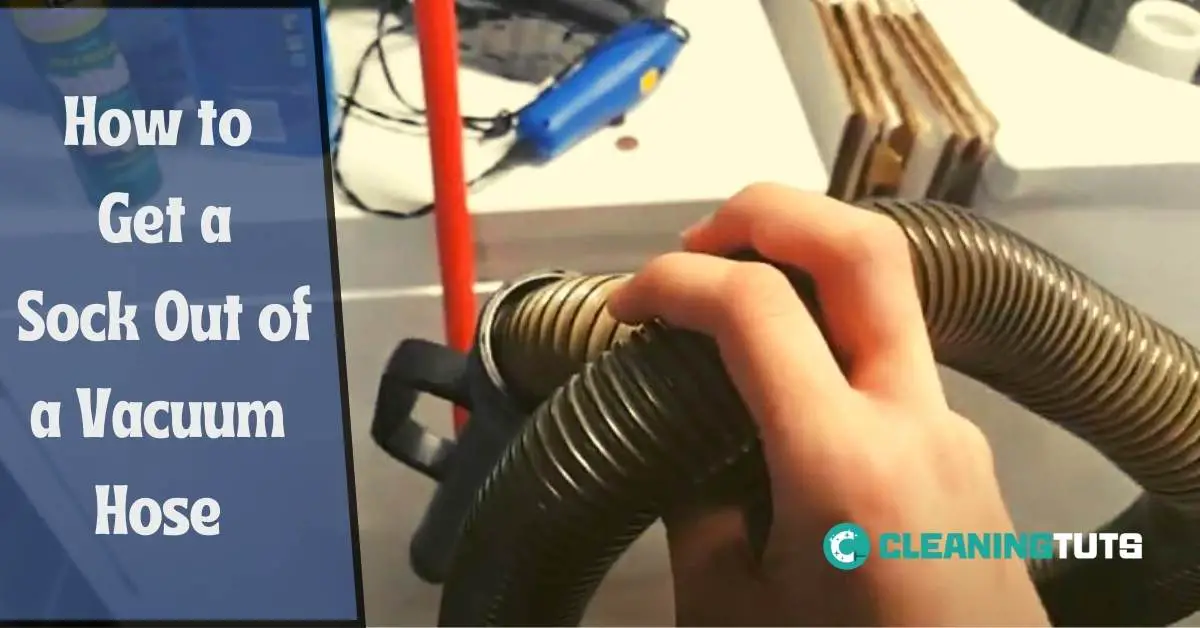
Method 1: Push the Sock Through with a Broom Handle
Step 1: Detach the Hose
Disconnect the hose from the vacuum body. Unplug the machine first. Refer to your user manual for model-specific detachment instructions—most hoses release via a twist-lock or press-fit coupling.
Step 2: Insert the Broom Handle
- Align the broom handle with the open end of the hose.
- Push steadily through the hose. Apply firm, even pressure—resistance is normal when the sock is near the bend or coupling.
- Continue until the handle exits the opposite end, bringing the sock with it.
- If resistance is excessive, try twisting the handle gently as you push.
For hoses longer than 6 feet, you may need to work in stages—push 2–3 feet at a time, then re-insert from the other end to meet in the middle.
Method 2: Hook and Pull the Sock Out
- Locate the sock position by feeling along the hose or shining a flashlight through it.
- Straighten a wire coat hanger with pliers, then bend a small hook (approximately 1 inch) at the end.
- Insert the hook into the hose and maneuver it past the sock.
- Rotate the hook to catch the sock fabric, then pull slowly outward.
This method works best when the sock is lodged within 3 feet of either end. For deeper blockages, the broom handle method is more effective.
Tip: Use a flashlight with at least 500 lumens to pinpoint the sock location through translucent hose material.
Method 3: Access Through the Bottom Cover
If the hose connects to a bag chamber or dirt tank at the base, this method provides direct access.
- Remove the screws securing the bottom cover (typically 4–8 Phillips-head screws).
- Open the compartment and locate the sock at the hose entrance.
- Grip the sock with fingers or use needle-nose pliers for a firm hold.
- Pull steadily at a 45-degree angle to avoid re-lodging it.
How to Clean the Hose After Removing the Blockage
Residue left behind causes future clogs. Follow these steps to restore full airflow:
- Detach the hose completely from the vacuum body.
- Fill a bucket with 1 gallon (3.8 liters) of warm water (105–115°F / 40–46°C).
- Add 2–3 drops of dishwashing liquid (pH 7–8, mildly alkaline).
- Submerge the hose and soak for 5–10 minutes.
- Insert a bottle brush (1 inch diameter) and scrub the interior in circular motions.
- Rinse thoroughly with clean water until all soap residue is gone.
- Hang the hose vertically and air dry for 24 hours before reattaching.
For plastic hoses, avoid water above 140°F (60°C) to prevent warping. For cloth-covered hoses, spot-clean with a damp cloth instead of full submersion.
Alternative: Mix 1/2 cup white vinegar (5% acetic acid) with 1 gallon of warm water for a natural deodorizing clean. This dissolves mild residue buildup and eliminates odor-causing bacteria.
Regular hose maintenance prevents 90% of vacuum clogs. For a complete guide, see our article on how to clean a vacuum cleaner properly.
Additional Methods for Stubborn Blockages
Use a Second Vacuum to Create Reverse Suction
Position a second vacuum at the opposite end of the hose. Set it to blow mode (reversing airflow) if available, or use its maximum suction to create opposing force. This can dislodge the sock from the opposite direction, especially if it has traveled past any bends in the hose.
What causes grime buildup inside vacuum hoses?
How do I remove a sock from a shop vac hose?
Why does vacuum suction weaken after a hose clog?
What is the standard diameter of vacuum hoses?
Can a clogged brush roll cause suction loss?
How can I reduce vacuum cleaner noise?
References
- U.S. Department of Energy. (2022). Vacuum Cleaners and Residential Energy Consumption. energy.gov.
- Consumer Reports. (2023). Vacuum Cleaner Buying Guide. consumerreports.org.
- Environmental Protection Agency. (2021). Indoor Air Quality: Residential Vacuum Cleaning. epa.gov.


