
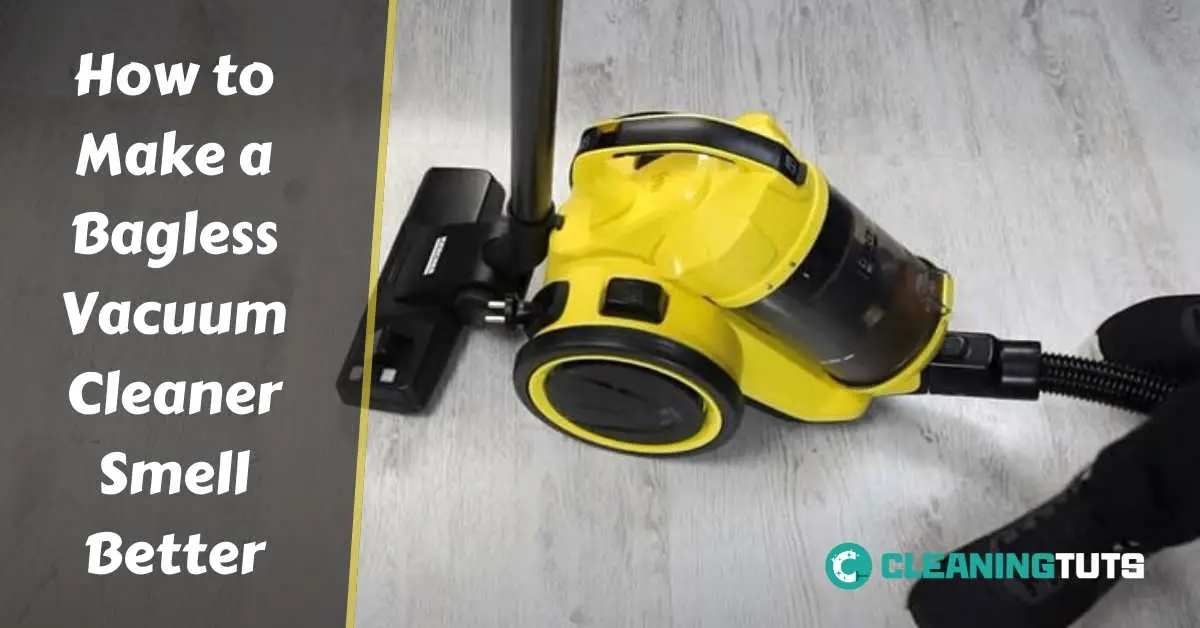
How to Make a Bagless Vacuum Cleaner Smell Better – Easy Hacks

Bagless vacuum cleaners develop persistent odors when dust, pet hair, and debris accumulate in filters, canisters, and hoses, creating ideal conditions for bacteria and mold growth that produce foul smells within 24–48 hours of dampness exposure. Regular maintenance prevents 90% of vacuum odor problems according to manufacturer cleaning guidelines.
This guide covers proven methods to eliminate vacuum odors using baking soda, vinegar, and proper filter maintenance, plus a prevention routine to keep your vacuum smelling fresh long-term.
What Causes a Bagless Vacuum Cleaner to Smell Bad?
Bagless vacuum odors originate from six primary sources: dirty filters, water accumulation, a full canister, pet hair buildup, a burnt belt, and clogged hoses. Identifying the cause determines the correct solution.
Dirty Filters
HEPA filters trap particles as small as 0.3 microns, but they also capture organic matter that decomposes over time. Bacteria colonize used filters and release isovaleric acid, the compound responsible for the “sock smell” in vacuums. Replace or deep-clean filters every 3–6 months depending on usage frequency.
Water Accumulation
Mold spores require only 24–48 hours of moisture exposure to establish colonies. Water left in the tank or collected in hose bends creates mold colonies that produce musty odors detectable at concentrations as low as 0.5 parts per million.
Canister Full of Dirt
Organic debris in a full canister decomposes aerobically within 12–24 hours at room temperature (68–72°F / 20–22°C). Dust mite populations can reach 100,000 per cubic meter in vacuum dust, and their fecal matter contains guanine, which produces ammonia-like odors.
Allowing Pet Hair and Other Debris to Accumulate
Pet hair contains skin cells and sebum that bacteria decompose. In homes with pets, vacuum odor develops 2–3 times faster than in pet-free households. Weekly canister emptying reduces bacterial growth by up to 80% compared to monthly emptying.
Burnt Belt
A worn vacuum belt generates friction heat exceeding 400°F (204°C), melting rubber and releasing acrid smoke odors. Inspect belts monthly for cracks, glazing, or discoloration. Replace belts every 6–12 months or when stretch exceeds 10% of original length.
How to Make Your Bagless Vacuum Smell Better: Step-by-Step Guide
Follow this sequential cleaning process to eliminate existing odors and restore fresh performance to your bagless vacuum cleaner.
Step 1: Clean or Replace Filters
洗vable filters require monthly cleaning using a specific procedure:
- Tap large particles loose by striking the filter against a hard surface 10–15 times.
- Rinse under lukewarm water (95–105°F / 35–40°C) — hot water damages filter media.
- Apply a drop of unscented dish soap to trapped oils and gently agitate for 30 seconds.
- Rinse thoroughly until water runs clear, approximately 60 seconds.
- Air dry completely for 24–48 hours in a well-ventilated area before reinstallation.
For disposable filters, replace every 3 months (high-usage) or 6 months (standard households). Scented dryer sheets placed near (not on) the filter add freshness without restricting airflow.
Pro tip: Keep a spare washable filter on hand so you never run the vacuum without one during the 24-hour drying period.
Step 2: Clean the Canister
The collection canister requires monthly washing to prevent odor residue buildup:
- Unplug the vacuum and remove the canister from the housing.
- Empty debris into a trash bag outdoors to avoid redistributing dust indoors.
- Rinse the interior with cool water to remove loose particulate.
- Fill with hot water (140°F / 60°C maximum) and 2–3 drops of unscented dish soap.
- Swish vigorously for 60 seconds, paying attention to corners and seals.
- Rinse three times with clean water to remove all soap residue.
- Dry completely with a microfiber cloth before reassembly.
For stubborn odors, add 2 tablespoons of baking soda to the water mixture. The alkaline formula neutralizes acidic odor compounds at pH 8.5–9.0.
Step 3: Clean or Replace the Hose
Clogged hoses restrict airflow, causing the motor to overheat and produce burning smells. Clean hoses every 3–6 months:
- Disconnect the hose from both the vacuum and attachment wand.
- Insert a broom handle wrapped with a damp microfiber cloth and push through the hose length.
- Repeat with a dry cloth to absorb moisture.
- Flush with a solution of 1 cup warm water mixed with 1 tablespoon white vinegar (5% acetic acid).
- Rinse with clean water and allow to air dry vertically for 4 hours.
Replace hoses that show cracks, collapsed sections, or internal mold that cannot be removed. Most manufacturer hoses cost $15–$40 USD.
Step 4: Unclog the Beater Brush
Hair wrapped around brush roll bearings creates uneven rotation and a sulfurous odor. Clear the brush roll every 2–4 weeks:
- Disconnect the power attachment and place the vacuum upside down on a flat surface.
- Use serrated scissors to cut through tangled hair loops without damaging bristles.
- Pry wrapped hair loose from bearings using a flathead screwdriver.
- Wipe the brush roll with a damp cloth and allow to dry before reinstalling.
If the brush roll doesn’t spin freely after cleaning, the bearing may be worn and requires replacement. Standard brush roll bearings cost $8–$15.
Step 5: Clean the Vacuum Exterior
Exterior cleaning prevents odor transfer from the outer case to the cleaner’s internal components:
- Disconnect power and wipe the housing with a microfiber cloth dampened with water and 1 drop of dish soap.
- Clean rubber seals and gasket lines where debris accumulates.
- Buff fingerprints from plastic surfaces using a dry microfiber cloth.
- Spray a fabric freshener specifically designed for vacuum safe materials if desired.
For a natural freshening boost, place a cotton ball with 2–3 drops of lemon or tea tree essential oil inside the empty canister before vacuuming. The oil’s antimicrobial properties (particularly tea tree oil, which kills 99.9% of household bacteria) addodor-fighting benefits.
How to Prevent Vacuum Odor: Maintenance Schedule
Establishing a regular maintenance routine eliminates 90% of vacuum odor problems before they start:
| Task | Frequency | Products Needed |
|---|---|---|
| Empty canister | After each use or when 50% full | Trash bag |
| Rinse canister | Weekly | Warm water, dish soap |
| Clean washable filter | Monthly | Lukewarm water, dish soap, 24-hr dry time |
| Replace disposable filter | Every 3–6 months | Manufacturer filter (~$12–$25) |
| Clear brush roll | Every 2–4 weeks | Scissors, screwdriver |
| Deep clean hose | Every 3–6 months | Vinegar solution, microfiber cloths |
| Inspect belt | Monthly | Replacement belt if needed (~$8–$15) |
Odor-Neutralizing Products for Vacuums
These products combat vacuum odors using different mechanisms:
- Tablet Deodorants: Slowly release fragrance over 30–60 days of use. Place one tablet in the empty dust cup before reassembly.
- Essential Oil Drops: Apply 2–3 drops of lemon, lavender, or tea tree oil to a cotton ball and place in the dust cup. Tea tree oil provides antimicrobial benefits at 0.5–1% concentration.
- Baking Soda: Sprinkle 2 tablespoons on carpet before vacuuming. The sodium bicarbonate neutralizes acids and absorbs moisture for 30 minutes before vacuuming.
- Air Freshener Tablets: Activated charcoal tablets absorb odor molecules at the molecular level. Replace every 60–90 days.
- Cinnamon Sticks or Orange Peel: Place a small cinnamon stick or 2–3 orange peel segments in the dust cup for natural fragrance. Replace every 2 weeks.
Caution: Avoid adding excessive liquid scents or oil-based products directly to the filter, as these can damage the motor or void the warranty. Always check your vacuum’s user manual for manufacturer-approved scent products.
Frequently Asked Questions
Can I put a dryer sheet in my bagless vacuum?
What vinegar ratio eliminates vacuum odors?
How often should I replace my vacuum filter?
Does baking soda damage vacuum filters?
Why does my vacuum smell like burning rubber?
References
- U.S. Environmental Protection Agency. (2024). Indoor Air Quality: Vacuum Cleaners and Indoor Pollutants. EPA.
- American Lung Association. (2023). Healthy Indoor Air Tips: Reducing Allergens at Home. ALA.
- NSF International. (2023). Home Cleaning Products and Their Effectiveness. NSF.
Wrapping Up
Bagless vacuum odors result from accumulated organic matter in filters, canisters, and hoses. Monthly deep cleaning using the five-step process above eliminates existing odors, while a consistent maintenance schedule prevents their return. Essential oils, baking soda, and tablet deodorants provide ongoing freshness between cleanings.
For related cleaning guides, explore our Vacuum Troubleshooting Master Hub or learn about cleaning chemistry principles that make these methods effective.
Meta: Bagless vacuum smell elimination using baking soda, vinegar, and filter maintenance. Professional cleaning tips for pet owner vacuums and allergen reduction.


